06 Boots vs Trail Runners Best picks
Best Trail Runners for Beginners
A first trail shoe wants cushion and a forgiving lug, not a 5 mm mud spike. These six are ranked on how easy they are to get along with.
- By
- Mike M.
- Updated
- Method
- How we choose
We earn a commission if you buy through our links, at no extra cost to you. It never decides the ranking: the method is published. Affiliate disclosure
Quick picks
The short answer
| # | Product | Best for | Score | Price |
|---|---|---|---|---|
| 01 | 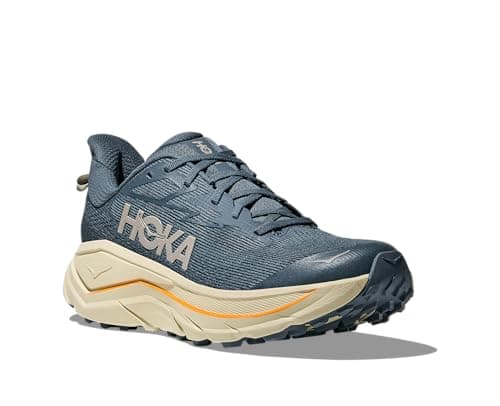 HOKA Challenger 8 A road-to-trail shoe with the tallest stack here (44/37 mm) and shallow 4 mm lugs - the least specialised option on the page. | Best first trail shoe | 7.3 / 10 | $149.90Amazon |
| 02 | 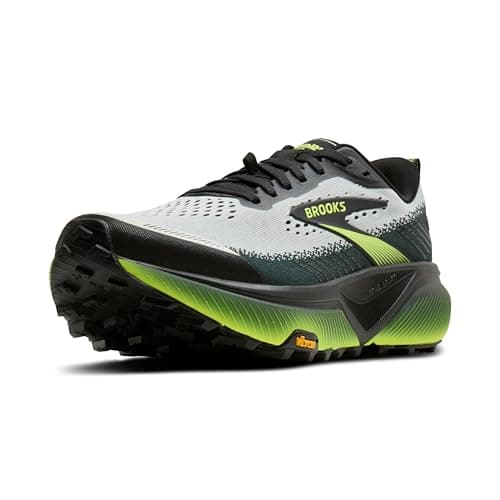 Brooks Cascadia 20 A 39/33 mm stack, 4 mm lugs, a TPU toe cap and a men's E - Wide: forgiving without being a road shoe. | Best first shoe for real trail | 7.2 / 10 | $159.95Amazon |
| 03 | 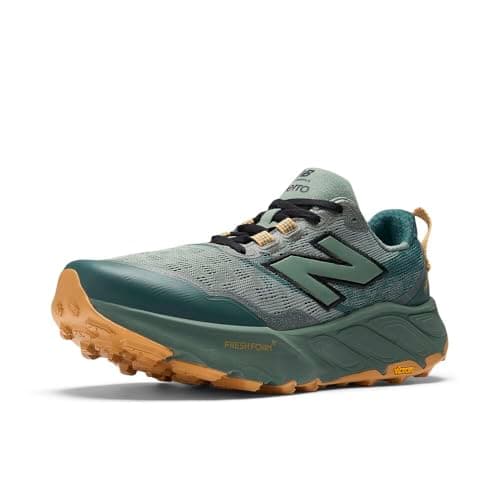 New Balance Fresh Foam X Hierro v9 Men's D, 2E and 4E with a 42/38 mm stack - the easiest shoe here to fit if a standard width pinches. | Best beginner shoe for wide feet | 7.0 / 10 | $151.88Amazon |
| 04 |  Saucony Peregrine 16 The lowest stack here at 33/29 mm plus a forefoot Rock Guard: more trail feel, less forgiveness. | Best first shoe for rocky trails | 6.7 / 10 | Check price on Amazon |
| 05 | 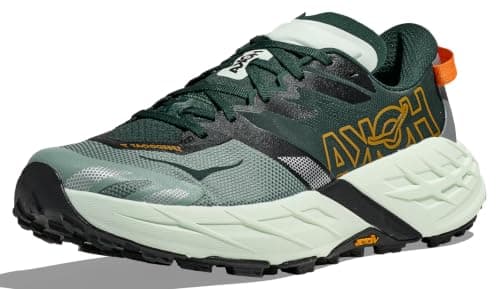 HOKA Speedgoat 7 5 mm Vibram Megagrip lugs at 272 g - excellent, but built for technical ground a beginner may not be on yet. | Best if you already hike a lot | 6.6 / 10 | Check price on Amazon |
| 06 | 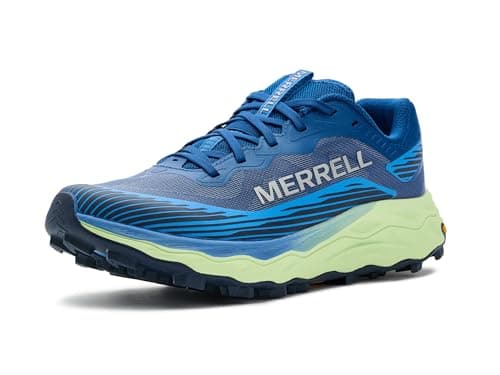 Merrell Agility Peak 6 An underfoot rock plate and 5 mm lugs, at the highest published drop on the page (8 mm). | Best beginner shoe with a rock plate | 6.3 / 10 | $158.00Amazon |
#ad · Prices come live from Amazon, last checked November 3, 2026. Scores are ours, compiled from published specs, widths and warranty terms against this page's problem. Product photos come straight from the retailer listing. Tap a row for the full write-up.
What a first trail shoe actually needs
The instinct when you buy a first trail shoe is to buy the most capable one - the deepest lugs, the stickiest rubber, the shoe the ultrarunners use. That is almost always the wrong call, because a specialised trail shoe is specialised against something. Deep 5 mm lugs are brilliant in mud and loose dirt and vague and clacky on hard-packed trail or tarmac. A low 33 mm stack gives you trail feel you cannot use yet and transmits every rock you have not learned to avoid. An aggressive upper locks the foot down for side-hilling at speed and feels tight on a three-hour walk.
What a beginner wants instead is forgiveness: enough cushion that a bad step is absorbed rather than delivered, a lug depth that works on the mixed hard-and-soft ground most people actually start on, and - more important than either - a width that fits. That is the reason the three shoes at the top of this list are the least extreme ones here, and the reason the Speedgoat 7 (an outstanding shoe) finishes fifth. If you have not yet settled whether you want a trail shoe at all rather than a boot, read hiking boots vs. trail runners first; it is the decision that matters more than any model on this page.
Stack and lugs, side by side
How we ranked these for a first pair
Problem fit carries 45% here - more than on any other page on the site - because beginner-friendliness is the whole question, and it is scored as how unspecialised the shoe is: cushion high, lug depth moderate, upper comfortable, drop unremarkable. Durability is 20%, fit range 15%, weight 10% and support 10%. A shoe loses points for being excellent at one thing, which is why the two 5 mm-lug Vibram Megagrip shoes sit at the bottom. See how we choose for the standing rubric.
In detail
Every pick, in full
01
Best first trail shoe
HOKA Challenger 8
Built for
A road-to-trail shoe with the tallest stack here (44/37 mm) and shallow 4 mm lugs - the least specialised option on the page.
Widths sold: Men's and women's sold; Running Warehouse shows 2 widths on some men's colorways (letters not stated)
Published specs (tap for source)
- Problem fit (45%)
- 9
- Fit range (15%)
- 6
- Support & protection (10%)
- 3
- Durability & warranty (20%)
- 6
- Weight (10%)
- 8
What it gets right
- 44 mm heel / 37 mm forefoot stack, the tallest in our trail-runner list
- Light at 275 g (men's 9)
- Road-to-trail design for mixed surfaces, with an rPET mesh upper
What it doesn't
- Shallow 4 mm lugs in Durabrasion rubber rather than a Vibram outsole
- Width letters not published
- No rock plate listed
Skip it if…
…your hikes are steep, muddy or technical: it's sold as a road-to-trail shoe, with 4 mm Durabrasion lugs rather than Vibram Megagrip.
#ad · Price as of November 3, 2026 · Affiliate disclosure for the link to HOKA Challenger 8
02
Best first shoe for real trail
Brooks Cascadia 20
Built for
A 39/33 mm stack, 4 mm lugs, a TPU toe cap and a men's E - Wide: forgiving without being a road shoe.
Widths sold: Men's D - Medium, E - Wide; women's version sold (widths not verified)
Published specs (tap for source)
- Problem fit (45%)
- 8.5
- Fit range (15%)
- 7
- Support & protection (10%)
- 3.5
- Durability & warranty (20%)
- 6
- Weight (10%)
- 8
What it gets right
- Sold in men's E - Wide
- TPU toe cap on an air mesh upper
- Running Warehouse lists 4 mm more stack than the previous Cascadia
What it doesn't
- No rock plate listed
- Not waterproof: Brooks sells a separate Cascadia 20 GTX
- Shallower 4 mm lugs than the Speedgoat 7's 5 mm
Skip it if…
…you need wider than an E: the New Balance Fresh Foam X Hierro v9 is sold up to 4E.
#ad · Price as of November 3, 2026 · Affiliate disclosure for the link to Brooks Cascadia 20
03
Best beginner shoe for wide feet
New Balance Fresh Foam X Hierro v9
Built for
Men's D, 2E and 4E with a 42/38 mm stack - the easiest shoe here to fit if a standard width pinches.
Widths sold: Men's D, 2E, 4E; women's version sold (widths not verified)
Published specs (tap for source)
- Problem fit (45%)
- 7.5
- Fit range (15%)
- 9
- Support & protection (10%)
- 3
- Durability & warranty (20%)
- 6
- Weight (10%)
- 8
What it gets right
- Men's 4E, the widest option among the trail runners we list
- Running Warehouse files it under "Max Cushion Trail"
- Engineered mesh upper with a gusseted tongue
What it doesn't
- No rock plate listed
- Women's widths not verified
- Specs are retailer-listed (Running Warehouse); New Balance's own page couldn't be checked
Skip it if…
…you want to stay close to the ground on technical terrain: its 42/38 mm stack is one of the tallest in our trail-runner list.
#ad · Price as of November 3, 2026 · Affiliate disclosure for the link to New Balance Fresh Foam X Hierro v9
04
Stock photoBest first shoe for rocky trails
Saucony Peregrine 16
Built for
The lowest stack here at 33/29 mm plus a forefoot Rock Guard: more trail feel, less forgiveness.
Widths sold: Men's D - Medium, EE - Wide; women's version sold (widths not verified)
Published specs (tap for source)
- Problem fit (45%)
- 7.5
- Fit range (15%)
- 7
- Support & protection (10%)
- 4
- Durability & warranty (20%)
- 5.5
- Weight (10%)
- 8
What it gets right
- Flexible forefoot Rock Guard plate
- Sold in men's EE - Wide
- Built-in gaiter D-ring
What it doesn't
- Not waterproof: Saucony sells a separate Peregrine 16 GTX
- Weight differs by source (283 g at Running Warehouse, 10.4 oz at Zappos)
Skip it if…
…you want a lot of cushion underfoot: its 33/29 mm stack is lower than the Brooks Cascadia 20 (39/33 mm) or New Balance Hierro v9 (42/38 mm).
#ad · Price as of November 3, 2026 · Affiliate disclosure for the link to Saucony Peregrine 16
05
Best if you already hike a lot
HOKA Speedgoat 7
Built for
5 mm Vibram Megagrip lugs at 272 g - excellent, but built for technical ground a beginner may not be on yet.
Widths sold: Men's D, 2E; women's version sold (widths not verified)
Published specs (tap for source)
- Problem fit (45%)
- 7
- Fit range (15%)
- 7
- Support & protection (10%)
- 3.5
- Durability & warranty (20%)
- 6
- Weight (10%)
- 8
What it gets right
- Sold in men's 2E
- 5 mm Vibram Megagrip lugs
- Gaiter compatible, with an RPET woven upper
What it doesn't
- No rock plate listed
- Not waterproof: HOKA sells a separate Speedgoat 7 GTX
- Specs are retailer-listed (Running Warehouse); HOKA's own page couldn't be checked
Skip it if…
…you want a rock plate under the forefoot: none is listed for the Speedgoat 7, while the Saucony Peregrine 16 and Merrell Agility Peak 6 list one.
#ad · Price as of November 3, 2026 · Affiliate disclosure for the link to HOKA Speedgoat 7
06
Best beginner shoe with a rock plate
Merrell Agility Peak 6
Built for
An underfoot rock plate and 5 mm lugs, at the highest published drop on the page (8 mm).
Widths sold: Men's Medium, Wide Width; women's version sold (widths not verified)
Published specs (tap for source)
- Problem fit (45%)
- 6.5
- Fit range (15%)
- 7
- Support & protection (10%)
- 4.5
- Durability & warranty (20%)
- 5.5
- Weight (10%)
- 8
What it gets right
- Underfoot rock plate
- 5 mm Vibram Megagrip lugs
- Sold in men's Wide Width, with FLEXconnect flex grooves
What it doesn't
- 8 mm drop, the highest published drop among the trail runners we list
- Not waterproof: Merrell sells a separate GORE-TEX version
- Women's widths not verified
Skip it if…
…you prefer a low drop: at 8 mm it's the highest published drop in our trail-runner list, while the Saucony Peregrine 16 and New Balance Hierro v9 are 4 mm.
#ad · Price as of November 3, 2026 · Affiliate disclosure for the link to Merrell Agility Peak 6
The two mistakes new trail users make
The first is buying the same size as a road shoe. Trail shoes get used on descents, which pushes the toes forward, and under a pack, which spreads the foot - most hikers want about half a size more length than in a road shoe. The APMA's guidance on choosing shoes for sports is to fit the shoe to the larger foot and to try shoes on with the socks you will actually use; that applies exactly here. The second mistake is wearing a brand-new pair on a long first hike. Trail shoes need far less breaking in than a leather boot, but the sock-and-shoe combination still needs a shakedown walk - our guide to our method aside, the practical steps are in how to prevent blisters hiking.
A third thing, less a mistake than a surprise: none of these shoes is waterproof. Every pick here is a mesh shoe, and most of these models exist in a separate GORE-TEX version. For a beginner that is usually the right trade - mesh drains and dries, and a membrane in a low shoe only helps until water comes over the collar. The full argument is in waterproof vs. non-waterproof hiking boots.
Who should skip all of these
If your first hikes involve a heavy pack, scree, or multi-day distance, start with a boot instead: best hiking boots for beginners is the equivalent list in a mid cut. If you already know you have a specific fit problem - wide forefoot, flat arches, bunions - go to the page for that problem rather than a beginner list, because fit beats category every time; best trail runners for flat feet and best trail runners for wide feet both filter this same field. And if you want to know whether a trail shoe can double as your everyday shoe, are trail runners good for everyday use answers that directly.
How we chose
Scored on published specs, side by side
Every pick here is scored against the problem this page is about, using the brand's published specs, width and size charts, warranty terms and cited research. Every figure links to where it came from, so you can check any of it yourself — the full source list is at the bottom of the page.
Scores are editorial judgments from that published data, weighted for this page's problem. The weights are below. The full rubric is on How We Choose.
- Problem fit
- 45%
- Fit range
- 15%
- Support & protection
- 10%
- Durability & warranty
- 20%
- Weight
- 10%
The weights this page used for its scores.
FAQ
Questions people ask
Do beginners need trail running shoes or can road shoes do?
How deep should the lugs be on a first trail shoe?
Is more cushion better for a beginner?
How long do beginner trail shoes last?
Keep going
Related fixes and picks
- Best hiking boots for beginnersThe same question answered in a mid-cut boot.
- Best trail runners for hikingThe wider field, ranked for hiking rather than for a first pair.
- Trail runners vs. running shoesWhether the shoes you already own will do.
- Are trail runners good for everyday use?Whether a first pair can double as your daily shoe.
- Best trail runners for menThe same field ranked on published men's width letters.
- Hiking boots vs. trail runnersThe category decision, with what the research does and does not support.
Update log
What changed
- First published.
Receipts
Sources
- 01Running Warehouse: HOKA Challenger 8 product page (accessed Sep 2026)
- 02Running Warehouse: Brooks Cascadia 20 product page (accessed Sep 2026)
- 03Running Warehouse: Saucony Peregrine 16 product page (accessed Sep 2026)
- 04Running Warehouse: HOKA Speedgoat 7 product page (accessed Sep 2026)
- 05APMA: Choosing Shoes for Sports (accessed Sep 2026)
Specs, widths and materials come from the brand's own pages (or a named retailer's listing where the brand doesn't publish them); health information comes from the research and professional bodies linked above. Prices come live from Amazon and carry the date they were checked. Where a figure isn't published, we say so. Read the full method.