05 Wet Feet & Winter Fix guide
Waterproof vs. Non-Waterproof Hiking Boots: How to Actually Choose
A membrane keeps rain and puddles out. It also traps heat and some sweat, and it costs more. Here's how the choice actually plays out on the trail, and which one fits your hikes.
- By
- Mike M.
- Updated
- Method
- How we choose
We earn a commission if you buy through our links, at no extra cost to you. It never decides the ranking: the method is published. Affiliate disclosure
How a waterproof membrane actually works
Most "waterproof" hiking boots work the same way regardless of brand: a thin membrane is laminated between the outer material and the lining. The best-known version is GORE-TEX, which uses a sheet with roughly nine billion microscopic pores per square inch. Each pore is about 20,000 times smaller than a water droplet, so rain and puddle water can't get through, but it's also around 700 times bigger than a water-vapor molecule, so sweat vapor from your foot can still escape (GORE-TEX, accessed Sep 2026). That's the whole trick: waterproof to liquid water, breathable to vapor.
Not every "waterproof" boot uses GORE-TEX. Several brands build their own membrane in-house instead of licensing one: KEEN calls its version KEEN.DRY, Oboz calls its B-DRY, and some Merrell models simply say "waterproof membrane" without naming it. The physics is the same idea in each case, but only GORE-TEX publishes independent pore-size numbers; an in-house membrane's performance is whatever the brand states on its own product page.
How to tell if a listing is actually waterproof
Retailers don't always make this obvious, and "water-resistant" and "waterproof" get used loosely in marketing copy. Before you buy, work through this in order:
- Read the exact product name. "Waterproof," "GORE-TEX," or a named in-house membrane (KEEN.DRY, B-DRY, Danner Dry) means a real membrane; no such word means there isn't one.
- Check the spec sheet for a "Membrane" row. If it's blank or says "breathable mesh lining," treat the shoe as non-waterproof regardless of what the marketing copy implies elsewhere on the page.
- Look for a second version of the same model without the waterproof word in its name. Most brands sell both, and if you can find the plain version, that confirms the "waterproof" one really is a distinct, membraned product rather than just a different colorway.
- Don't assume "water-resistant" gear does the same job. A water-resistant gaiter or boot sheds light moisture but isn't built to survive sustained rain or a puddle the way a membraned waterproof product is; the ratings aren't interchangeable.
Choose by conditions, not by habit
The membrane's job is to trade a little breathability for keeping liquid water out. That trade is worth it in some conditions and not in others. Use your typical trail conditions to decide, not whichever type you already own:
| Your typical conditions | Choose | Why |
|---|---|---|
| Cold, wet, muddy or snowy trails | Waterproof | Keeps rain, slush and mud out and helps the boot hold in warmth. |
| Hot, dry trails and summer day hikes | Non-waterproof | Mesh breathes better and dries almost instantly if it does get wet. |
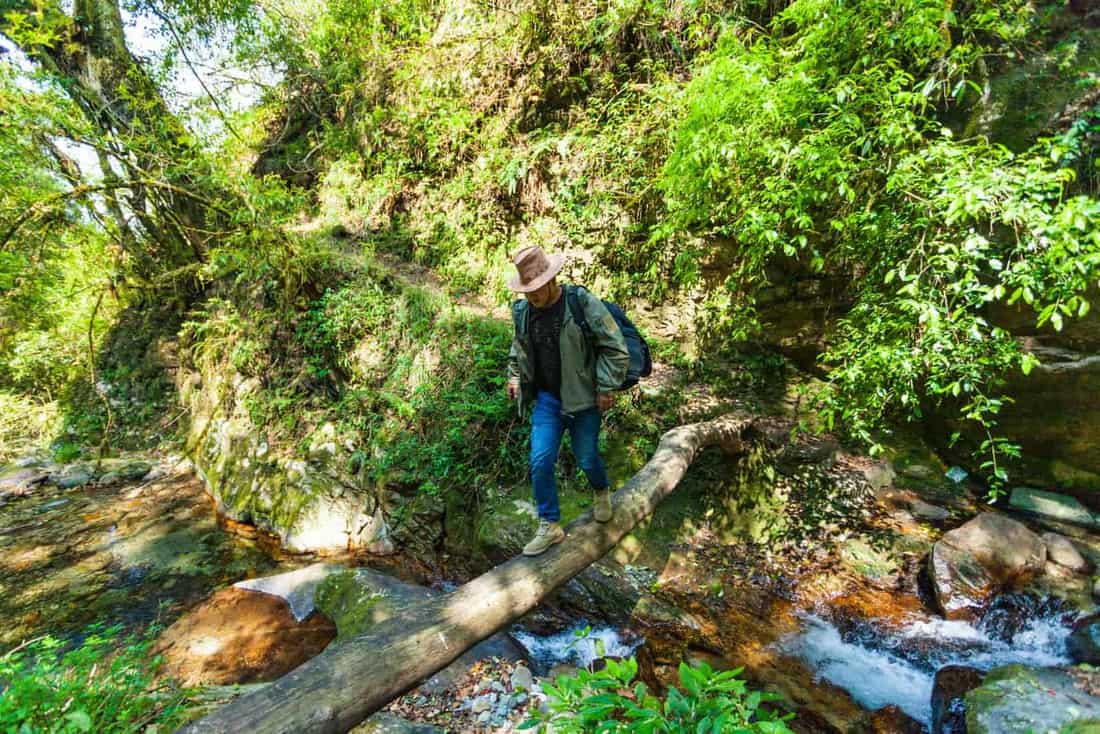
| Frequent creek or river crossings | Non-waterproof, or a trail runner | Once water gets in over the collar, a membrane traps it inside instead of letting it drain. |
| Mixed weather, multi-day backpacking | Depends on terrain and pack weight | See hiking boots vs. trail runners for the fuller decision. |
For snow specifically, the calculus tilts hard toward waterproof, plus insulation. The American Podiatric Medical Association recommends waterproof, insulated winter boots for snowy climates and warns that damp, perspiring feet chill faster and become more susceptible to skin problems (APMA, accessed Sep 2026). If you're deciding between a true winter boot and a waterproof three-season boot, see hiking boots vs. snow boots. For rain and light snow that a boot's collar can't shut out on its own, add gaiters.
Location and season shift the table more than most hikers expect. The same trail can call for opposite answers in July and January: a dry, dusty summer route is a non-waterproof trail, while the same route under spring snowmelt or fall rain becomes a waterproof one. If you hike one region across seasons rather than one trail type all year, it's common to own both a non-waterproof pair for the dry months and a waterproof pair for the wet ones, rather than trying to find a single boot that's the right compromise for every month.
The trade-off: dry feet vs. sweaty feet
A membrane blocks liquid water in both directions: rain can't get in, but it also can't get out quite as fast as bare mesh would let it. On a hot, humid hike, your feet can produce more sweat vapor than the membrane comfortably clears, so a waterproof boot can feel warmer and damper than a non-waterproof one, even with zero rain. The American Podiatric Medical Association notes that constant moisture "breaks down the skin, allowing infection to set in," and recommends wicking synthetic or wool socks over cotton for anyone dealing with sweaty feet (APMA, accessed Sep 2026).
Sock choice matters here as much as the boot does. The APMA specifically calls out 100% cotton socks, which "absorb moisture but do not wick it away from the skin and frequently lead to blisters" (APMA, accessed Sep 2026), and that's true whether the moisture is rain that got in or sweat that couldn't get out. A wool or synthetic wicking sock does more for how dry your feet feel, on either side of the waterproof decision, than switching membranes alone would.
The Merrell Moab 3 line makes the trade-off concrete, because it's the same shoe sold both ways:
| Spec | Merrell Moab 3 | Merrell Moab 3 Waterproof |
|---|---|---|
| Membrane | None (breathable mesh lining) | Merrell waterproof membrane (in-house, unnamed) |
| Weight | 1 lb 0.22 oz / 460 g (half pair) | 1 lb 0.92 oz / 480 g (half pair) |
Twenty grams (half pair) is the entire cost of adding the membrane. Everything else, the upper, the outsole, the fit, is unchanged. That's a useful way to think about the decision: you're not choosing between two different shoes, you're choosing whether you want that membrane for the conditions you actually hike in.
Wet skin, blisters and infection risk
Wet feet aren't just uncomfortable. Skin that stays damp for hours softens and grips a sock less well, which raises friction, and softened skin blisters more easily than dry skin. That's true whether the moisture came from rain that got past a non-waterproof boot or from sweat trapped inside a waterproof one. See how to prevent blisters hiking for the fuller fix order. In cold, wet conditions specifically, prolonged exposure can also lead to a non-freezing cold injury sometimes called trench foot or immersion foot, caused by long, continuous exposure to a wet, cold environment or by actual immersion in water, with symptoms including tingling, burning, pain and swelling (Ohio State University Extension, accessed Sep 2026). That risk is a real argument for waterproof footwear on cold, wet trails, and for drying out and changing socks whenever you get the chance.
None of this means non-waterproof footwear is unsafe; it means the conditions matter more than the label on the box. A non-waterproof shoe in warm, dry weather that occasionally gets damp from sweat isn't the same risk as boots soaked through on a cold, all-day rain. Match the footwear to the actual forecast and terrain rather than defaulting to whichever type feels like the "safe" choice out of habit.
Membranes wear out: care and durability
A membrane doesn't fail all at once. What usually goes first is the durable water repellent (DWR) finish on the outer fabric, the coating that makes rain bead up and roll off instead of soaking into the material. GORE-TEX's own care guidance says DWR isn't permanent: once water stops beading on the surface, the treatment has worn down and needs restoring, first by washing and drying the item, then by applying heat, and if that doesn't bring it back, a pump-spray or wash-in reproofing product (GORE-TEX, accessed Sep 2026). Once the DWR is gone, the outer material soaks up water like a sponge even though the membrane underneath is still doing its job, which makes the boot feel like it's "leaking" and dries far slower.
DWR wears down faster than most hikers expect. GORE-TEX's own guidance notes that regular wear and tear, along with exposure to sunscreen, dirt, detergents and insect repellent, all shorten the treatment's lifespan (GORE-TEX, accessed Sep 2026). None of that damages the membrane itself, which is why re-treating the outer fabric usually fixes a boot that seems to have "stopped being waterproof" long before the membrane actually fails.
Want to see exactly how a specific boot performs with and without its membrane, rather than a general Moab example? Compare the Merrell Moab 3 waterproof vs. non-waterproof head to head.
What you're actually paying for
A waterproof membrane itself usually adds a modest amount to a boot's price over the same last without one, but the bigger cost differences in this category come from construction, not the membrane. A full-grain leather upper built to be resoled and rebuilt costs more up front than a synthetic-and-mesh upper, but it can outlast several pairs of the cheaper build if you keep having it repaired instead of replacing it outright. A lighter synthetic waterproof shoe is cheaper to replace but isn't built to be repaired the same way. Neither approach is a mistake; they're different bets on how you want to spend money over the life of the boot, which is worth thinking about before you buy rather than only comparing sticker price.
Where this fits in the boots-vs-runners decision
Waterproofing is only one piece of a bigger call. Whether you hike in a mid-cut boot, a low hiking shoe or a trail runner also comes down to terrain, pack weight and your ankle history, and every one of those categories is sold in both waterproof and non-waterproof versions. Trail runners lean hardest toward non-waterproof for a reason: their open mesh is built to drain and dry quickly after a crossing rather than to keep water out in the first place, which only makes sense if you've already decided speed and breathability matter more to you than a dry, sealed boot. If you haven't settled that larger question yet, start with hiking boots vs. trail runners and come back here once you know which footwear type you want, so you only have to make the membrane decision once.
Want a taller boot instead of a low shoe? See the best waterproof hiking boots for mid-cut picks sourced the same way.
How we chose
Units we claim to have tested: 0
Everyone in this category says they tested it. We didn't, and we say so. Every pick is scored from the brand's published specs, width and size charts, warranty terms and cited research, against the problem this page is about. The sources are listed at the bottom of the page.
Scores are editorial judgments from that published data, not lab results. Nobody pays for placement, and a missing spec is scored neutral, never guessed. The full rubric is on How We Choose.
- Problem fit
- 30%
- Fit range
- 25%
- Support & protection
- 20%
- Durability & warranty
- 15%
- Weight
- 10%
The weights this page used for its scores.
FAQ
Questions people ask
Are waterproof hiking boots worth it?
Are all hiking boots waterproof?
How can you tell if hiking boots are waterproof?
What's the difference between GORE-TEX and a non-GORE-TEX waterproof boot?
Do waterproof boots make your feet sweat more?
Should I buy waterproof boots for summer hiking?
Can I re-waterproof hiking boots once they stop working?
Are waterproof hiking boots good for river or creek crossings?
Keep going
Related fixes and picks
- Best waterproof hiking bootsMid-cut picks ranked for wet, muddy trails.
- How to keep feet dry hikingGaiters, socks and drying strategy beyond the boot itself.
- Merrell Moab 3 waterproof vs. non-waterproofThe same boot, compared with and without the membrane.
- Hiking boots vs. trail runnersThe bigger terrain-and-pack-weight decision this fits inside.
Update log
What changed
- First published.
Receipts
Sources
- 01GORE-TEX: The GORE-TEX Membrane, What It Is and How It Works (accessed Sep 2026)
- 02GORE-TEX: Durable Water Repellent (DWR) Care (accessed Sep 2026)
- 03APMA: Sweaty Feet (accessed Sep 2026)
- 04APMA: Winter Foot Care (accessed Sep 2026)
- 05Ohio State University Extension: Hypothermia, Frostbite and Trench Foot fact sheet (accessed Sep 2026)
We don't test boots, shoes or gear, and we don't pretend to. Specs, widths and materials come from the brand's own pages (or a named retailer's listing where the brand doesn't publish them); health information comes from the research and professional bodies linked above. Prices are set by Amazon and change often, so we don't print them. Where a figure isn't published, we say so. Read the full method.