01 Blisters & Hot Spots Fix guide
Why Your Toes Hurt Hiking Downhill (and Black Toenails Happen)
Sore toes and black toenails on descents both come from the same thing: your foot sliding forward and jamming into the front of the boot.
- By
- Mike M.
- Updated
- Method
- How we choose
We earn a commission if you buy through our links, at no extra cost to you. It never decides the ranking: the method is published. Affiliate disclosure
Why toes jam going downhill
Cleveland Clinic explains that "running downhill naturally pushes your toes forward in your shoes," and the same forward slide happens while hiking downhill, especially with a loaded pack adding momentum to each step. The repeated impact between your toenail and the front of the boot causes bleeding beneath the nail, a subungual hematoma, which shows up as the dark discoloration hikers call a black toenail (Cleveland Clinic: Runner's Toe, accessed Sep 2026). The same forward slide can also rub the skin between and on top of your toes enough to raise a blister, which the NHS attributes to plain friction against the skin (NHS: Blisters, accessed Sep 2026).
Trim and lace first, it's free
- Keep toenails trimmed short before a hike with real elevation loss. A longer nail has less room to spare before it hits the front of the boot.
- Snug the lacing across your forefoot and instep before a descent, then finish with a heel-lock at the top so your whole foot is held back rather than sliding forward as a unit. The full pattern is in hiking boot lacing techniques.
- Switch to moisture-wicking socks if your feet sweat heavily; a damp sock lets your foot slide more inside the shoe, per Cleveland Clinic's own prevention advice.
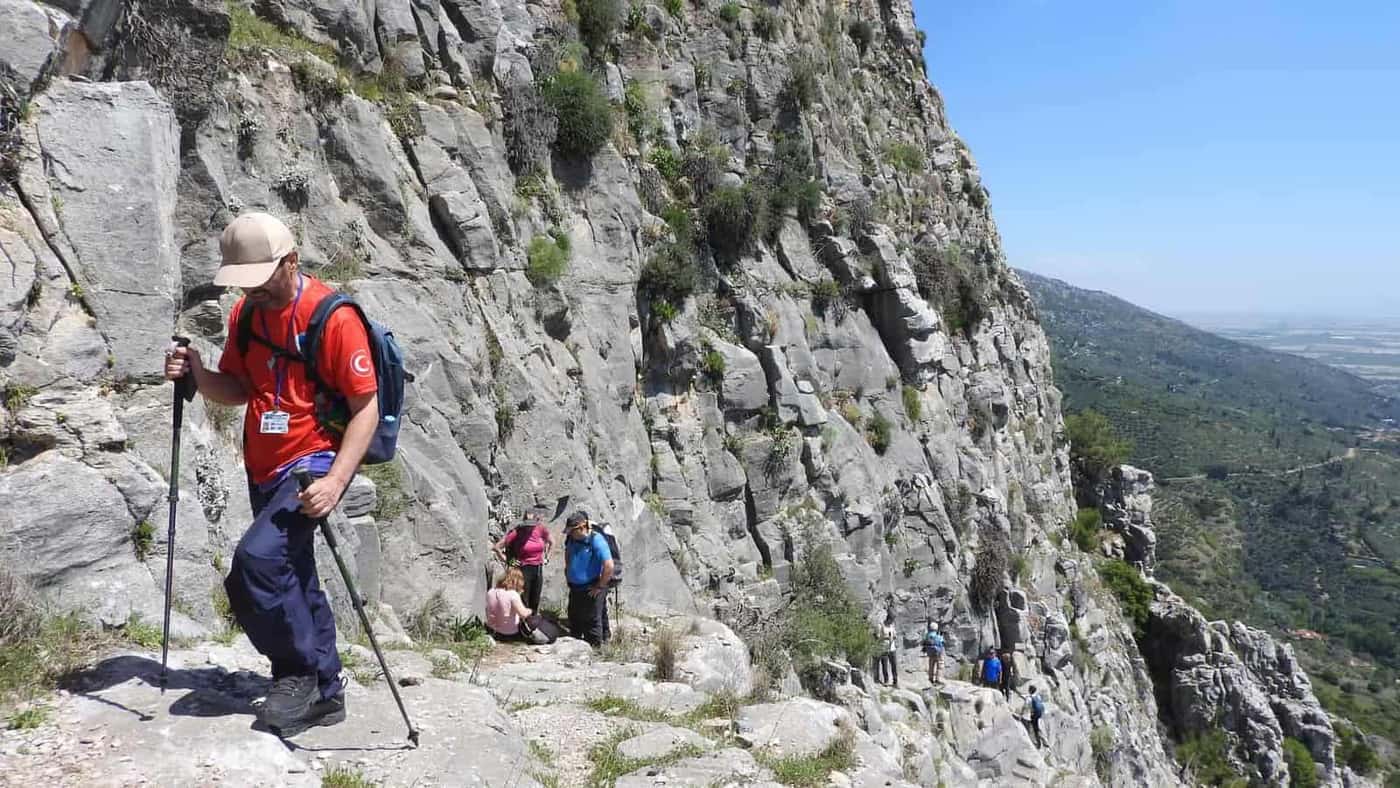
- Shorten your stride and use trekking poles on steep sections. Less momentum per step means less force driving your toes into the front of the boot on each footfall.
Check length, not just width
Toe jam on descents is a length problem more often than a width problem, which is why it can show up even in a boot that otherwise fits your foot shape well. If you can push your foot fully forward inside an unlaced boot and slide more than a thumb's width behind your heel, there's likely too much room for your foot to travel before your toes hit the front. Too little room does the opposite and jams your toes immediately. Either way, this is a fit check worth running in the store or right after a purchase, covered in full in how hiking boots should fit, rather than something to diagnose only after a hike has already bruised a toenail.
When footwear is the fix
Lacing and trimmed nails solve a lot of this, but if your toes still jam after both, the toe box itself may not have enough room to spare before your foot reaches the front. Cleveland Clinic's own rule of thumb for buying shoes is to "give your toes some space, but not so much that your foot slides around," which is really the same fit balance that matters for boots on a descent. A boot or shoe built with a genuinely roomier toe box gives your toes more distance to travel before they hit anything, and a toe sock keeps the toes themselves from rubbing against each other once they're under pressure.
See best toe socks and liner socks for more options if a five-toe design isn't for you.
When a black toenail is worth a doctor's visit
A small, dark spot under the nail that isn't especially painful usually just grows out over several months. Cleveland Clinic advises seeing a podiatrist if the pain is severe or throbbing and doesn't ease, or if the dark area covers roughly half the nail or more, since draining the pooled blood can relieve the pressure and lower the risk of complications (Cleveland Clinic: Runner's Toe, accessed Sep 2026). This is general information, not medical advice for your specific foot.
If your feet hurt in other spots after a hike too, not just the toes, see feet hurt after hiking for the wider picture, and check how hiking boots should fit before your next purchase.
How we chose
Units we claim to have tested: 0
Everyone in this category says they tested it. We didn't, and we say so. Every pick is scored from the brand's published specs, width and size charts, warranty terms and cited research, against the problem this page is about. The sources are listed at the bottom of the page.
Scores are editorial judgments from that published data, not lab results. Nobody pays for placement, and a missing spec is scored neutral, never guessed. The full rubric is on How We Choose.
- Problem fit
- 30%
- Fit range
- 25%
- Support & protection
- 20%
- Durability & warranty
- 15%
- Weight
- 10%
The weights this page used for its scores.
FAQ
Questions people ask
Why do my toes hurt when hiking downhill?
Why do my toenails turn black after hiking?
Why do you lose toenails when hiking?
Does a bigger boot size fix black toenails?
Do toe socks prevent black toenails?
Keep going
Related fixes and picks
- Hiking boot lacing techniquesThe forefoot lacing pattern that holds your foot back on descents.
- Best toe socks and liner socksMore toe-sock options beyond the one pick here.
- How should hiking boots fitHow to check toe-box length and width before you buy.
- Best wide toe box hiking shoesThe full roundup if you need more room up front than these two.
Update log
What changed
- First published.
Receipts
Sources
- 01Cleveland Clinic: Runner's Toe (accessed Sep 2026)
- 02NHS: Blisters (accessed Sep 2026)
- 03Running Warehouse: Altra Lone Peak 9+ product page (accessed Sep 2026)
- 04Topo Athletic: men's MTN Racer 4 product page (accessed Sep 2026)
- 05Injinji: Trail Midweight Crew product page (accessed Sep 2026)
We don't test boots, shoes or gear, and we don't pretend to. Specs, widths and materials come from the brand's own pages (or a named retailer's listing where the brand doesn't publish them); health information comes from the research and professional bodies linked above. Prices are set by Amazon and change often, so we don't print them. Where a figure isn't published, we say so. Read the full method.