06 Boots vs Trail Runners Best picks
Best Hiking Boots for Heavy Hikers
More body weight means more load through the midsole, more pressure under the foot, and often a wider, higher-volume foot to fit. No brand publishes a weight rating, so this page ranks boots on the four things they do publish: platform stiffness, shank, width range and whether the sole can be replaced.
- By
- Mike M.
- Updated
- Method
- How we choose
We earn a commission if you buy through our links, at no extra cost to you. It never decides the ranking: the method is published. Affiliate disclosure
Quick picks
The short answer
| # | Product | Best for | Score | Price |
|---|---|---|---|---|
| 01 | 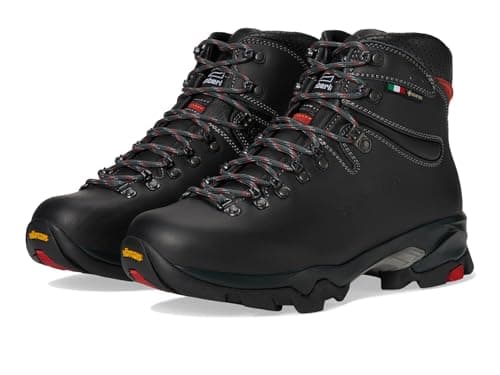 Zamberlan 996 Vioz GTX The most boot you can buy that is also sold in a published men's EE - Wide: full-grain leather, a 6 in shaft, and a construction Zamberlan will resole rather than retire. | Best overall | 8.1 / 10 | $374.00Amazon |
| 02 | 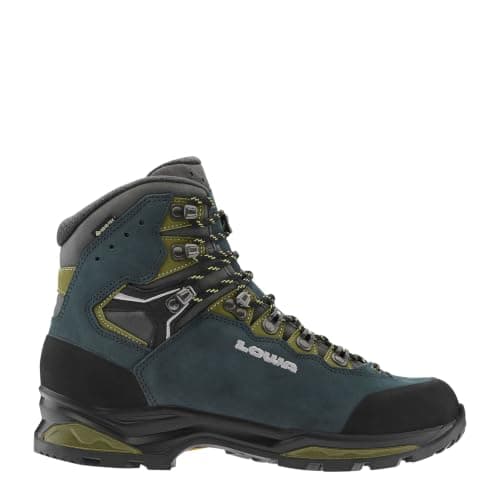 LOWA Camino EVO GTX The one boot here where the brand states the stiffness: LOWA rates it "Moderately Stiff" and recommends it for medium-weight backpacking. Men's Medium in practice. | Best stiff platform | 7.6 / 10 | $339.00Amazon |
| 03 | 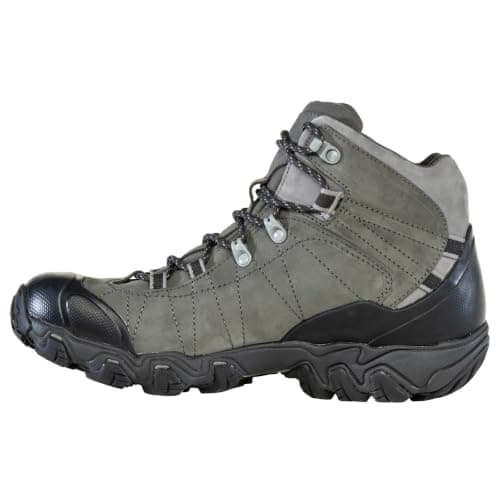 Oboz Bridger Mid Waterproof (B-DRY) A TPU chassis and a firm molded footbed with a deep heel cup, in Regular and Wide for both men and women. The best support-to-width ratio on the page. | Best support in a wide | 7.4 / 10 | $219.94Amazon |
| 04 | 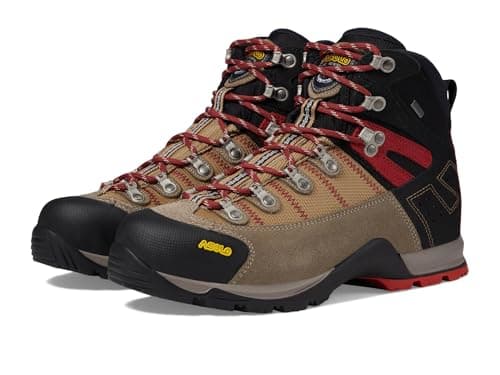 Asolo Fugitive GTX A PU midsole over a Duo Asoflex lasting board, not EVA foam - PU is the denser, slower-packing choice - plus a Wide Fit and a resoleable build. | Best PU midsole | 7.3 / 10 | $295.00Amazon |
| 05 | 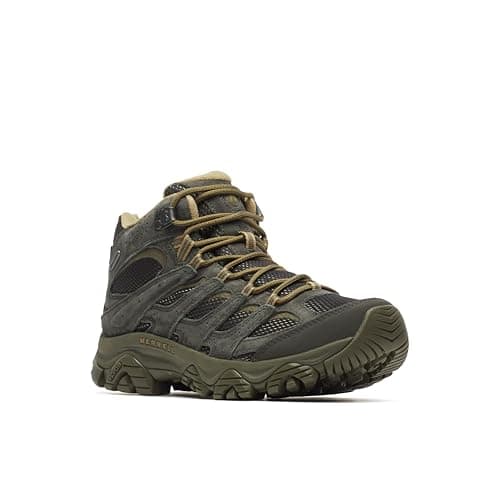 Merrell Moab 3 Mid Waterproof The lightest reasonable starting point: a molded nylon arch shank, 5 mm Vibram lugs, and Wide in both men's and women's with the same published size run as Medium. | Best first boot | 7.3 / 10 | $166.39Amazon |
| 06 | 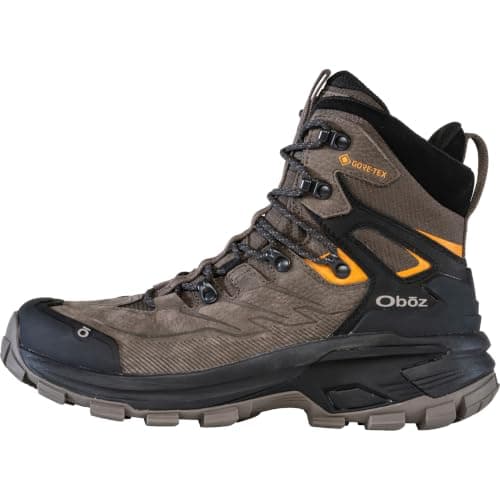 Oboz Bridger Ridge Mid GTX Waterproof Oboz names the use case outright - "Rugged Trails With Heavy Packs" - on a leather GORE-TEX upper. Standard width only, which is what keeps it out of the top three. | Best for heavy packs | 7.0 / 10 | $240.00Amazon |
| 07 | 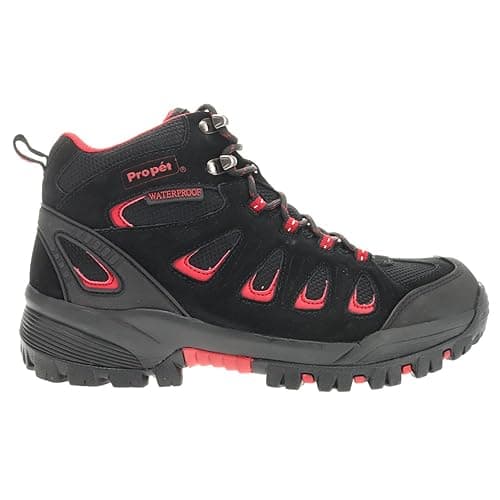 Propet Ridge Walker Four men's widths up to XX (5E). If your problem is that nothing in a standard Wide closes over your forefoot, start here and accept the plainer spec sheet. | Best extra-wide | 6.9 / 10 | $49.99Amazon |
| 08 | 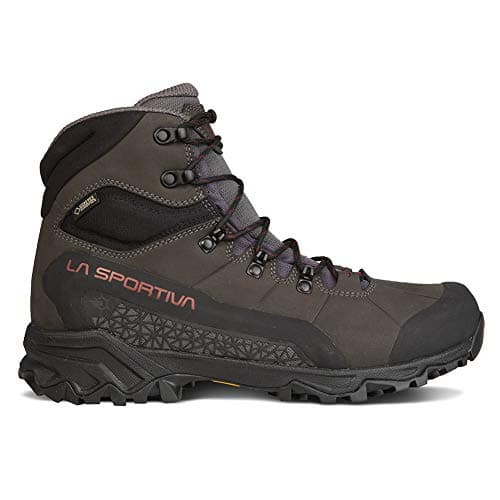 La Sportiva Nucleo High II GTX A high cut at 476 g per shoe, on a dedicated Tempo Wide last. The pick if the weight of the boots themselves is what is wearing you out. | Best light high-cut | 6.8 / 10 | Check price on Amazon |
| 09 | 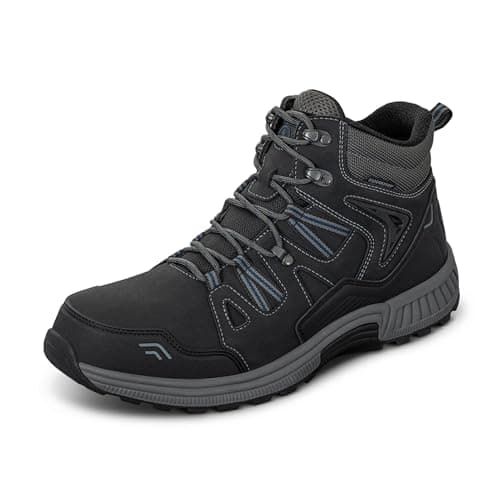 Orthofeet Ridgewood D, EE and 4E, with an orthotic insole and anatomical arch support already in the boot. Zappos lists it at 1 lb 15 oz, so it is the heaviest pick here. | Best stock insole | 6.8 / 10 | $159.00Amazon |
| 10 | 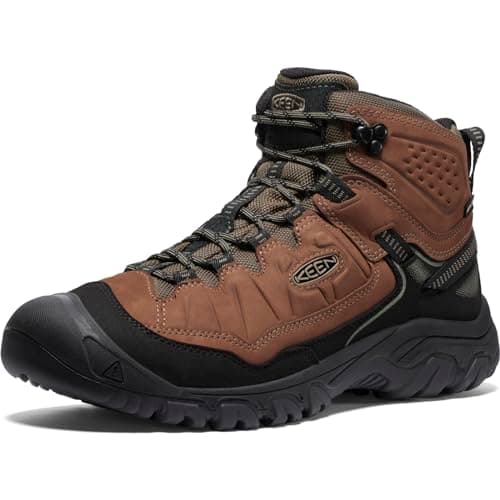 KEEN Targhee IV Mid Waterproof Standard and Wide in both men's and women's, with KEEN's generous forefoot. Less platform than the boots above it, more room than most of them. | Best roomy fit | 6.5 / 10 | $187.00Amazon |
#ad · Prices come live from Amazon, last checked November 3, 2026. Scores are ours, compiled from published specs, widths and warranty terms against this page's problem. Product photos come straight from the retailer listing. Tap a row for the full write-up.
Why Body Weight Changes the Boot
Two things change when you carry more body weight on trail, and both are about load rather than fitness. The first is what happens under your foot. A two-year longitudinal study in the Journal of Foot and Ankle Research followed 51 adults and reported significant associations between change in body weight and change in midfoot plantar pressure, concluding that “as body weight and plantar pressure increase, foot pain increases, and that the midfoot may be the most vulnerable site for pressure-related pain” (Walsh et al., 2017). That is a direct argument for a boot with a real midsole and a real footbed under the arch, not a compressed foam sheet.
The second is what happens to the boot. A midsole is a spring that fatigues, and the rate it fatigues at is a function of the load cycled through it. A hiker at 240 lb with a 30 lb pack puts roughly a third more load through the same stack of foam per step than a hiker at 180 lb with the same pack, which is why the honest advice for heavier hikers is not “buy a special boot” but “buy a boot whose platform is denser than you think you need, and expect to replace it sooner.” Our guide to when to replace hiking boots covers the midsole-compression checks that matter most here.
There is a third factor that gets skipped entirely: feet get wider under load. The AAOS recommends measuring your feet standing, because they spread under your own body weight, and that the fix for a shoe that pinches at the sides is a wider shoe rather than a longer one. Half the boots on this page earn their place on width range alone.
No Brand Publishes a Weight Limit
We went looking for one. Not a single manufacturer page we checked for this roundup — Zamberlan, LOWA, Oboz, Asolo, Merrell, La Sportiva, Propet, Orthofeet, KEEN — states a maximum user weight, a load rating, or a body-weight recommendation for any hiking boot. Trekking poles publish limits. Harnesses publish limits. Boots do not.
What brands do publish is an intended use, and that is the closest legitimate proxy. LOWA states the Camino EVO GTX is for “medium weight backpacking, rugged hiking, and mountain hunting” and rates the boot “Moderately Stiff” (LOWA, accessed Oct 2026). Oboz lists the Bridger Ridge Mid GTX as “Best for… Rugged Trails With Heavy Packs” (Oboz). Those statements are about total load through the boot, and total load does not care whether the weight came from you or from your pack. A boot built to carry 50 lb of gear under a 170 lb hiker is a boot built to carry 220 lb.
The Four Things to Check
1. Midsole material. Polyurethane (PU) is denser and slower to pack out than EVA foam, which is why it survives on backpacking boots and disappears from running shoes. Asolo publishes a PU midsole over a Duo Asoflex lasting board on the Fugitive GTX (Asolo); LOWA publishes a dual-density DuraPU midsole on the Camino EVO (LOWA). If a boot publishes only “EVA,” expect the midsole to be the first thing that goes.
2. The shank or chassis. This is the plate between midsole and insole that stops the boot twisting. Merrell publishes a molded nylon arch shank on the Moab 3 Mid Waterproof; Oboz publishes a TPU chassis built into the Bridger Mid's outsole unit (Oboz). A boot with no published shank at all is a boot whose torsional stiffness you cannot check before buying, and torsional stiffness is exactly what collapses first under load.
3. Width range. Not whether a Wide exists — how many widths exist, and whether they exist in your gender. Propet lists the Ridge Walker in four men's widths up to XX (5E) (Zappos) and Orthofeet lists the Ridgewood in D, EE and 4E (Zappos). Merrell publishes its Moab 3 Mid Waterproof Wide at the same 495 g half-pair weight and the same men's 7-15 size run as the Medium (Merrell, accessed Oct 2026), so going Wide costs you nothing in size choice. If you are unsure which letter you need, read hiking boot widths explained first.
4. Resoleability. The most underrated spec for a heavier hiker, because you will wear outsoles out faster. Zamberlan publishes the 996 Vioz GTX as resoleable with a Flex-System ankle notch and Hydrobloc Terracare full-grain leather (Zamberlan); LOWA and Asolo both publish resoleable constructions. A $400 boot you resole twice costs less per mile than three $200 boots you throw away, and best hiking boot brands sets out which brands run a program and which do not.
How We Ranked These
Support and protection carries the most weight on this page (35%), followed by problem fit (30%), fit range (25% split as 15% here), durability and warranty (15%) and weight (5%). Boot weight is deliberately almost irrelevant here: an extra 200 g per boot matters far less than a platform that folds under you on mile nine. The scores are editorial judgments built from the published specs linked on each card, and the rank order is computed from those scores rather than chosen.
Three boots sit at the top because they are the only ones that publish all four signals: a dense midsole, a named stiffness or chassis, a real width range, and a resole path. The ones lower down each trade one of those away — usually width (La Sportiva's women's version is standard-last only; the Bridger Ridge Mid is Standard width only) or platform (the Propet and Orthofeet boots publish no shank, no lug depth and no drop at all).
Width and Volume, Not Just Width
Width is the measurement across the ball of your foot. Volume is the total space your foot takes up inside the boot, including instep height, and it is the one heavier hikers most often get wrong. A foot can be a standard width and still be high-volume, in which case a Wide boot gives you room in the wrong place and the laces still cut across the top of your foot.
Oboz is the most useful brand here because it publishes volume language outright: it describes the Bridger Mid's standard fit as suiting “medium volume feet” with “some combinations of high and/or low arches and a high and/or low instep” ( Oboz), and the Bridger Ridge Mid's standard as “C in the heel and D in the forefoot” at medium-high volume (Oboz). Almost nobody else does. If the pressure you feel is across the top of your foot rather than the sides, hiking boots for a high instep is the page you want, not this one.
Where Insoles and Socks Fit In
Given the midfoot-pressure finding above, the stock footbed matters more for a heavier hiker than for anyone else, and most boots ship a flat foam sheet. Two picks here do not: Oboz includes its triple-density O FIT insole with “a firm molded shell, deep heel cup, and medium-to-high arch support” (Oboz), and Orthofeet includes an orthotic insole with anatomical arch support (Zappos). On every other boot on this page, budget for an aftermarket insole as part of the purchase, not as a later fix — the options are in best insoles for hiking boots.
One caution on sizing up for a thicker insole or sock: do not. A boot that is already snug plus a thick footbed is a boot with less volume, not more support. Fit the boot with the insole and sock you intend to hike in, at the end of the day, with both feet measured standing.
Who Should Skip All of These
If you hike short, flat, maintained trails with a day pack and your feet are fine, you do not need a 715 g leather boot — a low hiking shoe or trail runner in a Wide will be more comfortable and you will walk further in it. Start at best hiking shoes for wide feet or best trail runners for wide feetinstead.
If you are dealing with heel or arch pain rather than a fit or support problem, that is a different page: best hiking boots for plantar fasciitis. And if your ankles are the issue rather than the platform, best hiking boots for ankle support ranks on cuff height and stability features instead of load.
In detail
Every pick, in full
01
Best overall
Zamberlan 996 Vioz GTX
Built for
The most boot you can buy that is also sold in a published men's EE - Wide: full-grain leather, a 6 in shaft, and a construction Zamberlan will resole rather than retire.
Widths sold: Men's D - Medium, EE - Wide (Zamberlan also sells a Wide Last version); Women's (Vioz GTX WNS)
Published specs (tap for source)
- Problem fit (30%)
- 9
- Fit range (15%)
- 7
- Support & protection (35%)
- 8
- Durability & warranty (15%)
- 9
- Weight (5%)
- 4
What it gets right
- Men's EE - Wide on Zappos, plus a Wide Last version from Zamberlan
- Resoleable full-grain leather, made in Italy
- 6 in shaft with a Flex-System ankle notch
What it doesn't
- 715 g per boot (half pair, US 8), heavy for short day hikes
- Women's (Vioz GTX WNS) widths weren't verified
Skip it if…
…you want a light boot for short day hikes: it's a full-grain leather boot at 715 g per boot (half pair, US 8).
#ad · Price as of November 3, 2026 · Affiliate disclosure for the link to Zamberlan 996 Vioz GTX
02
Best stiff platform
LOWA Camino EVO GTX
Built for
The one boot here where the brand states the stiffness: LOWA rates it "Moderately Stiff" and recommends it for medium-weight backpacking. Men's Medium in practice.
Widths sold: Men's Medium, Wide (Wide shown as unavailable on Sep 18, 2026)
Published specs (tap for source)
- Problem fit (30%)
- 8.5
- Fit range (15%)
- 5
- Support & protection (35%)
- 8
- Durability & warranty (15%)
- 9
- Weight (5%)
- 3
What it gets right
- Resoleable, so the outsole can be replaced
- LOWA rates it "Moderately Stiff" and recommends it for medium-weight backpacking
- Heinen Terracare nubuck with a GORE-TEX lining and Vibram Apptrail outsole
What it doesn't
- 800 g per shoe, a lot of boot for easy day hikes
- Men's only, and the Wide option was listed but unavailable when checked
- Cuff height not published
Skip it if…
…you mostly day hike on maintained trails: it is an 800 g-per-shoe backpacking boot that LOWA rates moderately stiff.
#ad · Price as of November 3, 2026 · Affiliate disclosure for the link to LOWA Camino EVO GTX
03
Best support in a wide
Oboz Bridger Mid Waterproof (B-DRY)
Built for
A TPU chassis and a firm molded footbed with a deep heel cup, in Regular and Wide for both men and women. The best support-to-width ratio on the page.
Widths sold: Men's Regular, Wide; Women's Regular, Wide
Published specs (tap for source)
- Problem fit (30%)
- 8.5
- Fit range (15%)
- 8
- Support & protection (35%)
- 7
- Durability & warranty (15%)
- 6
- Weight (5%)
- 6
What it gets right
- Regular and Wide for both men and women
- TPU chassis and rubber toe guard built into the Granite Peak outsole
- 19.0 oz / 538 g (men's), lighter than the Bridger Ridge Mid GTX's 25.0 oz
What it doesn't
- B-DRY is Oboz's own membrane, not GORE-TEX
- 12 mm drop, high if you prefer a flatter shoe
- Oboz doesn't state whether its weights are per shoe or per pair
Skip it if…
…you want a GORE-TEX membrane: the Bridger Ridge Mid GTX is the Oboz version with one.
#ad · Price as of November 3, 2026 · Affiliate disclosure for the link to Oboz Bridger Mid Waterproof (B-DRY)
04
Best PU midsole
Asolo Fugitive GTX
Built for
A PU midsole over a Duo Asoflex lasting board, not EVA foam - PU is the denser, slower-packing choice - plus a Wide Fit and a resoleable build.
Widths sold: Men's Regular, Wide Fit
Published specs (tap for source)
- Problem fit (30%)
- 8
- Fit range (15%)
- 7
- Support & protection (35%)
- 7
- Durability & warranty (15%)
- 8
- Weight (5%)
- 4
What it gets right
- Wide Fit option alongside Regular
- Resoleable, with a rubber toe cap
- GORE-TEX Performance Comfort lining
What it doesn't
- Men's sizes only on the checked page (UK 6.5-13.5)
- 693 g per boot (half pair, UK 8)
- Height not published
Skip it if…
…you need a women's size: the checked Asolo page lists men's sizes UK 6.5-13.5 only.
#ad · Price as of November 3, 2026 · Affiliate disclosure for the link to Asolo Fugitive GTX
05
Best first boot
Merrell Moab 3 Mid Waterproof
Built for
The lightest reasonable starting point: a molded nylon arch shank, 5 mm Vibram lugs, and Wide in both men's and women's with the same published size run as Medium.
Widths sold: Men's Medium, Wide; Women's Medium, Wide
Published specs (tap for source)
- Problem fit (30%)
- 7.5
- Fit range (15%)
- 8
- Support & protection (35%)
- 7
- Durability & warranty (15%)
- 7
- Weight (5%)
- 6
What it gets right
- Sold in Wide for both men and women
- Vibram TC5+ outsole with 5 mm lugs
- Pig suede leather and mesh upper over a molded nylon arch shank
What it doesn't
- Membrane is unnamed, so there's no third-party waterproof rating to check
- Check the Amazon listing: it may not stock every width
- Stack height not published
Skip it if…
…you hike mostly in hot, dry weather: a membrane slows drying and adds heat, and the breathable Moab 3 Mid does the same job cooler.
#ad · Price as of November 3, 2026 · Affiliate disclosure for the link to Merrell Moab 3 Mid Waterproof
06
Best for heavy packs
Oboz Bridger Ridge Mid GTX Waterproof
Built for
Oboz names the use case outright - "Rugged Trails With Heavy Packs" - on a leather GORE-TEX upper. Standard width only, which is what keeps it out of the top three.
Widths sold: Men's Standard (C heel, D forefoot); Women's version sold
Published specs (tap for source)
- Problem fit (30%)
- 8
- Fit range (15%)
- 6
- Support & protection (35%)
- 7
- Durability & warranty (15%)
- 7
- Weight (5%)
- 4
What it gets right
- Oboz says it is best for rugged trails with heavy packs
- Leather upper with a GORE-TEX membrane
- Standard fit is C in the heel and D in the forefoot, with medium-high volume
What it doesn't
- No wide width; the Bridger Mid B-DRY is the Oboz option sold in Wide
- 25.0 oz / 709 g, and Oboz doesn't state the basis
Skip it if…
…you need a wide width: Oboz lists it in Standard only, while the Bridger Mid B-DRY comes in Wide.
#ad · Price as of November 3, 2026 · Affiliate disclosure for the link to Oboz Bridger Ridge Mid GTX Waterproof
07
Best extra-wide
Propet Ridge Walker
Built for
Four men's widths up to XX (5E). If your problem is that nothing in a standard Wide closes over your forefoot, start here and accept the plainer spec sheet.
Widths sold: Men's M (D), E (W), X (3E) Extra Wide, XX (5E) XX-Wide
Published specs (tap for source)
- Problem fit (30%)
- 7.5
- Fit range (15%)
- 9
- Support & protection (35%)
- 6
- Durability & warranty (15%)
- 6
- Weight (5%)
- 5
What it gets right
- Four men's widths, up to XX (5E) XX-Wide
- Waterproof suede and mesh uppers
- Rubber toe bumper and a 4.5 in shaft
What it doesn't
- Zappos labels the E (W) width "Medium", so check the width letter before you buy
- No lug depth, drop or shank published; the outsole is unbranded rubber
- Only the men's version was verified
Skip it if…
…you want a light, technical boot for rocky ground: Zappos lists it at 1 lb 6 oz and it publishes no lug depth, shank or drop.
#ad · Price as of November 3, 2026 · Affiliate disclosure for the link to Propet Ridge Walker
08
Best light high-cut
La Sportiva Nucleo High II GTX
Built for
A high cut at 476 g per shoe, on a dedicated Tempo Wide last. The pick if the weight of the boots themselves is what is wearing you out.
Widths sold: Standard (Tempo last) and Wide (Tempo Wide last), sizes 38-47.5; Women's standard (Women's Tempo last), sizes 36-43
Published specs (tap for source)
- Problem fit (30%)
- 6.5
- Fit range (15%)
- 7
- Support & protection (35%)
- 7
- Durability & warranty (15%)
- 7
- Weight (5%)
- 6
What it gets right
- Wide version on a dedicated Tempo Wide last
- 476 g per shoe (men's) for a high-cut boot
- GORE-TEX Surround lining and a Vibram Nano XS-Trek outsole
What it doesn't
- La Sportiva's Wide page doesn't clearly say men's or women's (its 38-47.5 size range matches the men's)
- Women's version comes in standard width only
- Drop not published
Skip it if…
…you're a woman with wide feet: the women's version is made on a standard Women's Tempo last only.
#ad · Price as of November 3, 2026 · Affiliate disclosure for the link to La Sportiva Nucleo High II GTX
09
Best stock insole
Orthofeet Ridgewood
Built for
D, EE and 4E, with an orthotic insole and anatomical arch support already in the boot. Zappos lists it at 1 lb 15 oz, so it is the heaviest pick here.
Widths sold: Men's D (Medium), EE (Wide), 4E (X-Wide)
Published specs (tap for source)
- Problem fit (30%)
- 7.5
- Fit range (15%)
- 9
- Support & protection (35%)
- 6
- Durability & warranty (15%)
- 6
- Weight (5%)
- 3
What it gets right
- Three men's widths, up to 4E (X-Wide)
- Waterproof full-grain leather upper
- Orthotic insole with anatomical arch support comes in the boot
What it doesn't
- Heavy on paper: Zappos lists 1 lb 15 oz (unit not stated)
- Shaft height and outsole details not published
- Only the men's version was verified
Skip it if…
…you're counting ounces for long miles: Zappos lists it at 1 lb 15 oz, and the shaft height and outsole aren't published.
#ad · Price as of November 3, 2026 · Affiliate disclosure for the link to Orthofeet Ridgewood
10
Best roomy fit
KEEN Targhee IV Mid Waterproof
Built for
Standard and Wide in both men's and women's, with KEEN's generous forefoot. Less platform than the boots above it, more room than most of them.
Widths sold: Men's standard, Wide; Women's standard, Wide
Published specs (tap for source)
- Problem fit (30%)
- 6.5
- Fit range (15%)
- 8
- Support & protection (35%)
- 6
- Durability & warranty (15%)
- 6
- Weight (5%)
- 6
What it gets right
- Wide versions for both men and women
- KEEN.FUSION bonded (glue-free) construction; PFAS-free
- KEEN says its KEEN.RUGGED outsole is twice as abrasion-resistant as rubber
What it doesn't
- Upper material not stated on the checked KEEN pages
- Check the Amazon listing: it may not stock every width
- KEEN doesn't say whether its weights are per shoe or per pair
Skip it if…
…you want a GORE-TEX membrane: KEEN.DRY is KEEN's own in-house membrane.
#ad · Price as of November 3, 2026 · Affiliate disclosure for the link to KEEN Targhee IV Mid Waterproof
Fit Notes for Heavier Hikers
Buy in the evening, measure both feet standing, and size for the longer one. Both of those rules come straight from the AAOS fit guidance, and both matter more here because the swelling range is larger: a foot carrying more weight spreads more under load and swells more over a long day. A boot that fits perfectly at 9am and is tight at 4pm is the wrong boot, not a boot that needs breaking in.
Lace in two zones. Keep the forefoot lacing relaxed so the widest part of your foot can spread, and lock the instep and ankle so your heel stays put — a loose heel in a wide boot is the fastest route to a blister. The techniques are in hiking boot lacing techniques, and the heel-specific version is in heel slipping in hiking boots.
Expect a longer break-in on the leather picks. Zamberlan's full-grain leather and LOWA's nubuck both need miles before they stop being stiff, and the stiffer the boot the more that matters — how to break in hiking boots has the schedule. The synthetic and mesh picks (the Moab 3, the Bridger Mid, the Nucleo High II) need far less, which is a legitimate reason to pick one of them if your first hike is soon.
What Not to Buy
Avoid a boot whose only published midsole spec is “EVA,” with no shank, chassis or plate named. Avoid buying a size up to create room — it adds heel slip without adding width. And avoid any listing that claims a weight capacity: no brand on this page publishes one, so a number like that was invented by a reseller.
If price is the constraint, be honest about what the cheap end gives up on this specific problem. Our best hiking boots under $100 page covers the tradeoff, and the short version is that the platform is the first thing to go cheap — which is the one thing you cannot afford to compromise here.
How we chose
Scored on published specs, side by side
Every pick here is scored against the problem this page is about, using the brand's published specs, width and size charts, warranty terms and cited research. Every figure links to where it came from, so you can check any of it yourself — the full source list is at the bottom of the page.
Scores are editorial judgments from that published data, weighted for this page's problem. The weights are below. The full rubric is on How We Choose.
- Problem fit
- 30%
- Fit range
- 15%
- Support & protection
- 35%
- Durability & warranty
- 15%
- Weight
- 5%
The weights this page used for its scores.
FAQ
Questions people ask
Is there a weight limit on hiking boots?
Do hiking boots wear out faster if you are heavier?
Should a heavier hiker wear boots or trail runners?
Do I need a wide boot because I am heavier?
What is the most supportive hiking boot here?
What if a standard Wide still is not wide enough?
Will a thicker insole or sock make a boot more supportive?
Keep going
Related fixes and picks
- Best backpacking bootsThe same stiffness question, driven by pack weight instead of body weight.
- Best hiking boots for wide feetIf width, not support, is the binding constraint.
- When to replace hiking bootsHow to spot a midsole that has packed out under you.
- Do Merrell boots run wide?What Merrell's Wide Width actually is, model by model.
Update log
What changed
- First published.
Receipts
Sources
- 01Walsh et al., Journal of Foot and Ankle Research (2017): Increase in body weight over a two-year period is associated with an increase in midfoot pressure and foot pain (accessed Oct 2026)
- 02AAOS OrthoInfo: Shoes - Finding the Right Fit (accessed Oct 2026)
- 03Zamberlan: 996 Vioz GTX product page (accessed Oct 2026)
- 04LOWA: Camino EVO GTX product page (accessed Oct 2026)
- 05Oboz: men's Bridger Ridge Mid GTX Waterproof product page (accessed Oct 2026)
- 06Oboz: men's Bridger Mid Waterproof product page (accessed Oct 2026)
- 07Asolo: Fugitive GTX product page (accessed Oct 2026)
- 08Merrell: men's Moab 3 Mid Waterproof Wide Width product page (checked Oct 9, 2026)
- 09Zappos: Propet Ridge Walker product page (accessed Oct 2026)
- 10Zappos: Orthofeet Ridgewood product page (accessed Oct 2026)
Specs, widths and materials come from the brand's own pages (or a named retailer's listing where the brand doesn't publish them); health information comes from the research and professional bodies linked above. Prices come live from Amazon and carry the date they were checked. Where a figure isn't published, we say so. Read the full method.