06 Boots vs Trail Runners Fix guide
How Should Trail Running Shoes Fit?
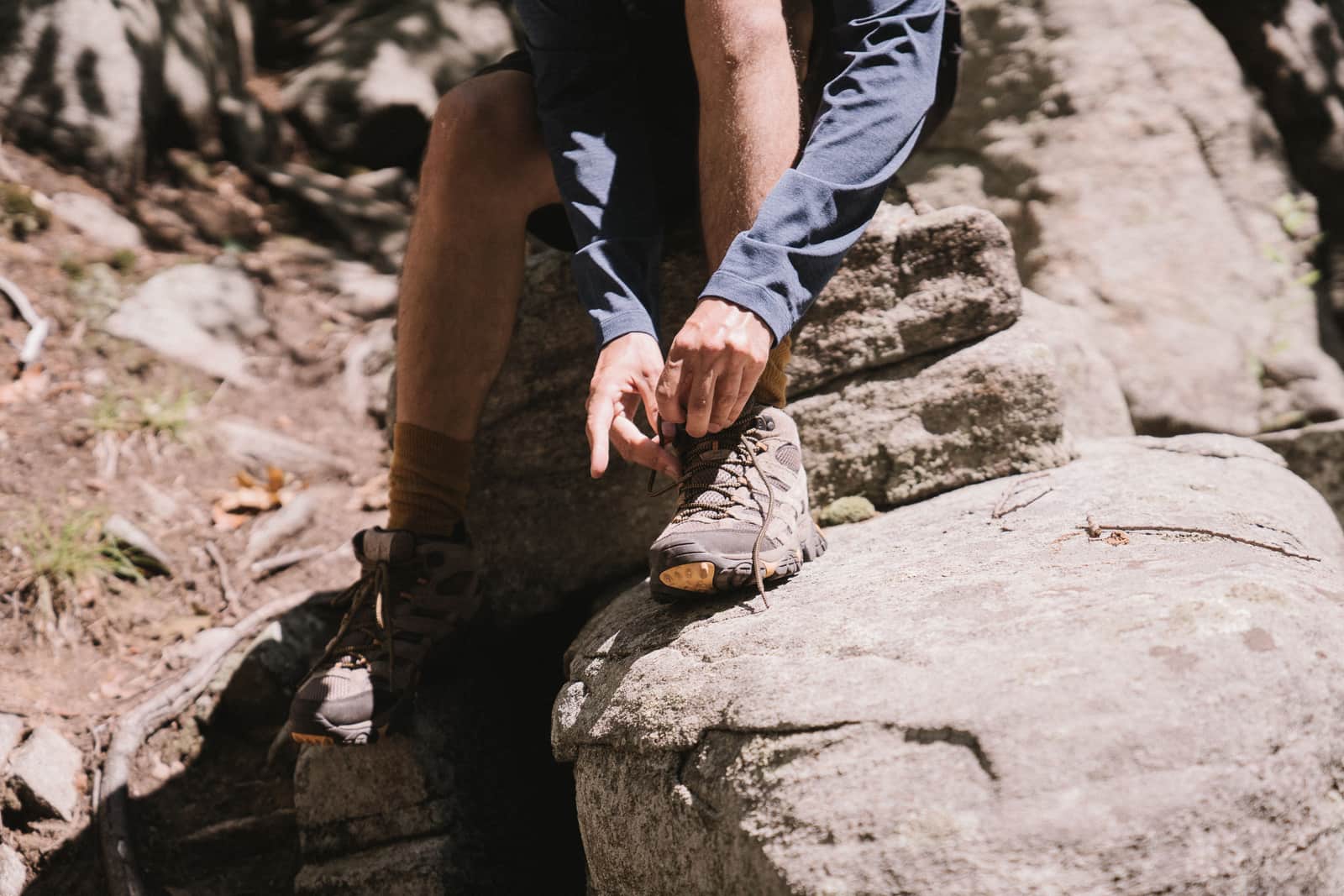
Trail shoes are sized for a foot that swells, slides forward on descents and wears a thicker sock. That is why your road size is usually half a size too small.
- By
- Mike M.
- Updated
- Method
- How we choose
We earn a commission if you buy through our links, at no extra cost to you. It never decides the ranking: the method is published. Affiliate disclosure
The short answer, and the one rule people break
Trail shoe fit is not the same problem as road shoe fit, because the loads are different. On a trail you descend, and every descent drives your foot forward into the front of the shoe; you are out for hours, and feet swell measurably over hours; and you wear a thicker hiking sock than you would for a 5 km road run. All three push in the same direction: you need more room at the front than your road size gives you.
The rule most people break is buying on the number rather than the foot. Shoe sizing is not standardised between brands, and the three trail shoes most often recommended on this site run noticeably differently from each other - HOKA's own Kaha listing carries a retailer note that it "fits a 1/2 size up for most". Measure, check against the five tests below, and treat the printed size as a starting guess. Boots are a related but distinct problem, covered in how should hiking boots fit?
The five checks, in order
1. Thumb's width at the toe. Stand up, laced, weight on the foot. Press down in front of your longest toe - which is not always the big toe. You want about a thumb's width, roughly 1 cm, of space. Less than that and your toes will hit the front on the first long descent, which is how black toenails happen; the full explanation is in toes hurt hiking downhill.
2. Wiggle room, laced. Per OrthoInfo (AAOS), a shoe should let you wiggle your toes once laced. If you cannot, the shoe is too narrow or too short, and no break-in will change that - a mesh trail shoe has almost nothing to stretch.
3. Heel hold. Walk a few steps and then up an incline if the shop has one. Your heel should stay down. Some movement is normal; repeated lift is the cause of heel blisters, and the fix is usually lacing rather than size - see heel slipping in hiking boots for the heel-lock technique, which works the same way in a low shoe.
4. The sock you will actually wear. A midweight merino hiking sock takes up measurably more room than a thin running sock, and swapping socks can move you a half size. Fit in the sock you hike in. Our sock ranking is best hiking socks.
5. Time of day. Feet are larger in the afternoon and larger again after exercise. A shoe that fits perfectly at 9am can be tight at mile 8. Fit late in the day and err toward room.
Why a half size up is usually right - and when it is not
The half-size-up guidance is sound for most hikers, but it is worth understanding what it is actually buying you, because applied blindly it creates a new problem. Going up a half size adds length, a little width, and volume everywhere - including at the heel. So if your heel is narrow, half a size up can convert a toe-bang problem into a heel-lift problem, and heel lift causes blisters faster than tight toes cause bruised nails.
The better sequence is: get the length right with the thumb-width check, then solve any heel looseness with lacing, and only then consider the next size. If both ends fight you - toes tight, heel loose - the shoe is the wrong shape for your foot rather than the wrong size, and a brand with a different last is the answer. That is the case for the anatomical-toe-box shoes, where the forefoot is wide but the heel is not: Topo publishes the clearest version of this, defining its men's wide as a 2E toe box with an E midfoot and heel.
| Spec | New Balance Fresh Foam X Hierro v9 | Saucony Peregrine 16 | HOKA Speedgoat 7 | Topo Athletic Ultraventure 5 |
|---|---|---|---|---|
| Widths | Men's D, 2E, 4E | Men's D - Medium, EE - Wide | Men's D, 2E | Men's Standard, Wide |
| Weight | 10.8 oz / 306 g (men's 9) | 10.0 oz / 283 g (men's 9, Running Warehouse; Zappos lists 10.4 oz) | 9.6 oz / 272 g (men's 9) | 10.7 oz (men's 9) |
| Stack height | 42 mm / 38 mm | 33 mm / 29 mm | 38 mm heel / 33 mm forefoot | 35 mm heel / 30 mm forefoot |
| Drop | 4 mm | 4 mm | 5 mm | 5 mm |
| Lug depth | 4.5 mm | 4 mm | 5 mm | Not published |
A locked heel and a loose forefoot: what good fit feels like
The target is specific and it is worth having in your head before you try anything on: snug at the heel and instep, free at the toes. Trail shoes achieve the first part through the upper and the lacing, and that is why lacing is a fit tool rather than a chore. A surgeon's knot over the instep pulls the heel back without tightening the forefoot; skipping an eyelet relieves pressure over a high instep; window lacing takes pressure off a single hot spot. All three are free and all three are in hiking boot lacing techniques.
One structural note specific to trail shoes: a gusseted tongue (the Hierro v9 has one) keeps grit out but also limits how much you can open the shoe to adjust volume, and a bungee or quick-pull lace system gives you an even closure at the cost of targeted adjustment. If you already know you need one specific lacing trick, buy a conventionally laced shoe.
When length isn't the problem: reading the width letters
If the shoe is long enough and still hurts across the ball of the foot, you need a width, not a size. Trail shoes publish these more often than boots do. In our registry: the New Balance Fresh Foam X Hierro v9 is sold in men's D, 2E and 4E - the widest trail shoe we list. The Saucony Peregrine 16 comes in D and EE. The HOKA Speedgoat 7 comes in D and 2E. The Brooks Cascadia 20 comes in D and E.
Width letters are not standardised between brands, so an EE in one is not an EE in another - hiking boot widths explained covers how to read them and how to measure your own forefoot at home. And if your issue is toe shape rather than overall width - a splayed forefoot, a bunion, a long second toe - a width letter is the wrong tool and an anatomical toe box is the right one: best wide toe box hiking shoes and best hiking shoes for bunions cover that case.
What is fixable, and what means you return the shoe
Fixable: heel lift (lacing), a single pressure point (window lacing, or a thinner sock), mild looseness overall (a thicker sock or an aftermarket insole, which also lets you fine-tune volume - best insoles for hiking boots covers the options). Also fixable: a shoe that feels stiff out of the box. Trail shoes need days, not weeks - how to break in hiking boots applies in a compressed form.
Not fixable, so return it: toes touching the front when you stand, pressure across the ball of the foot with the laces loose, numbness, or your little toe pressing against the upper. Mesh does not stretch in the places that matter, and hiking in a shoe that fails any of those tests is how people end up on how to prevent blisters hiking and why do my hiking boots hurt? Before you shop again, how to choose trail running shoes sets out which specs to prioritise.
How we chose
Scored on published specs, side by side
Every pick here is scored against the problem this page is about, using the brand's published specs, width and size charts, warranty terms and cited research. Every figure links to where it came from, so you can check any of it yourself — the full source list is at the bottom of the page.
Scores are editorial judgments from that published data, weighted for this page's problem. The weights are below. The full rubric is on How We Choose.
- Problem fit
- 30%
- Fit range
- 40%
- Support & protection
- 10%
- Durability & warranty
- 15%
- Weight
- 5%
The weights this page used for its scores.
FAQ
Questions people ask
Should trail running shoes be a size bigger?
How much room should be in the toe of a trail shoe?
Should my heel move in a trail running shoe?
Do trail running shoes stretch?
Which trail running shoes come in the widest sizes?
Keep going
Related fixes and picks
- How to choose trail running shoesThe five specs that decide the shoe itself.
- How should hiking boots fit?The boot version of this page.
- Heel slipping in hiking bootsThe lacing fix for the most common fit fault.
- Hiking boot widths explainedHow to read D, E, 2E and 4E - and measure your own.
- Best trail runners for wide feetEvery trail shoe with a published wide.
- Toes hurt hiking downhillWhat happens when the toe room is too tight.
Update log
What changed
- First published.
Receipts
Sources
- 01AAOS OrthoInfo: Athletic Shoes (accessed Sep 2026)
- 02Running Warehouse: men's New Balance Fresh Foam X Hierro v9 product page (checked Sep 2026)
- 03Running Warehouse: men's Saucony Peregrine 16 product page (checked Sep 2026)
- 04Running Warehouse: men's HOKA Speedgoat 7 product page (checked Sep 2026)
- 05Topo Athletic: men's Ultraventure 5 product page (checked Sep 2026)
- 06Topo Athletic: FAQ, width definitions (checked Sep 2026)
Specs, widths and materials come from the brand's own pages (or a named retailer's listing where the brand doesn't publish them); health information comes from the research and professional bodies linked above. Prices come live from Amazon and carry the date they were checked. Where a figure isn't published, we say so. Read the full method.