06 Boots vs Trail Runners Head to head
Brooks Cascadia 20 vs HOKA Speedgoat 7: Which Trail Shoe?
Same outsole brand, same price bracket, same wide availability. The decision comes down to lug depth, weight and what a toe cap is worth to you.
- By
- Mike M.
- Updated
- Method
- How we choose

We earn a commission if you buy through our links, at no extra cost to you. It never decides the ranking: the method is published. Affiliate disclosure
The verdict
Pick one in ten seconds
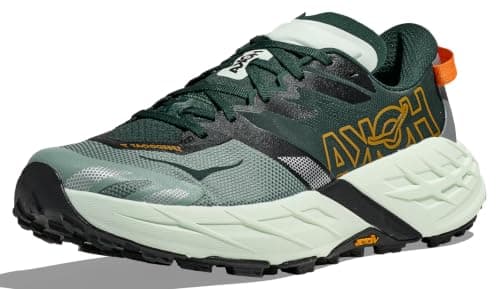
Pick for technical trail and long days
HOKA Speedgoat 7
6.5 / 105 mm Vibram Megagrip lugs at 272 g, in men's D and 2E - the deeper tread and the lighter shoe at the same time.
Check price on Amazon#ad · Price as of November 3, 2026 · Affiliate disclosure for the link to HOKA Speedgoat 7
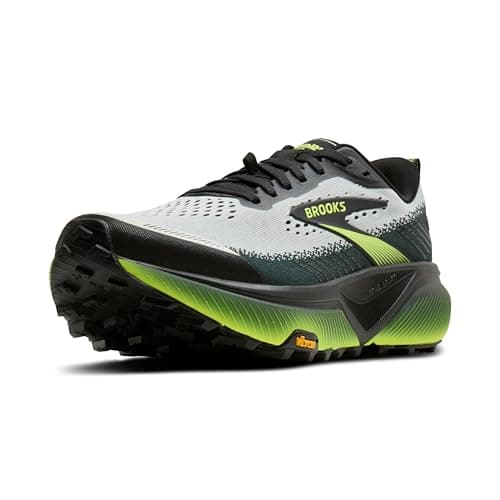
Pick for mixed ground and toe protection
Brooks Cascadia 20
6.4 / 104 mm lugs, a 39/33 mm stack and a TPU toe cap at 298 g, in men's D and a published E - Wide.
$159.95Amazon#ad · Price as of November 3, 2026 · Affiliate disclosure for the link to Brooks Cascadia 20
Specs side by side
| Spec | HOKA Speedgoat 7 | Brooks Cascadia 20 |
|---|---|---|
| Weight | 9.6 oz / 272 g (men's 9) | 10.5 oz / 298 g (men's 9) |
| Widths | Men's D, 2E | Men's D - Medium, E - Wide |
| Stack height | 38 mm heel / 33 mm forefoot | 39 mm / 33 mm |
| Drop | 5 mm | 6 mm |
| Lug depth | 5 mm | 4 mm |
| Midsole | Supercritical (SCF) EVA | Nitrogen-infused DNA FLASH v2 |
| Outsole | Vibram Megagrip with Traction Lug | Vibram Megagrip with Traction Lugs |
Lug depth and grip
Both shoes use Vibram Megagrip, so the rubber compound is not the variable here - the geometry is. HOKA publishes 5 mm lugs on the Speedgoat 7 and Brooks publishes 4 mm on the Cascadia 20. One millimetre sounds like nothing and behaves like a category difference: the deeper tread penetrates soft ground, loose dirt and mud, while the shallower one has more rubber in contact with hard surfaces and feels more settled on rock slabs, gravel and the road sections at either end of a trail. If you hike where the ground is soft more often than it is hard, that is the whole argument, and it is why the Speedgoat 7 leads this page. If your mix is the other way around, buy the Cascadia. The same logic drives our mud ranking in best hiking boots for mud.
Cushion, stack and weight
The Cascadia 20 is the taller shoe - 39 mm heel / 33 mm forefoot against the Speedgoat's 38/33 mm - but the gap is one millimetre at the heel, so in practice these two sit at the same height. Where they differ is what the foam is: the Speedgoat 7 uses supercritical (SCF) EVA and the Cascadia 20 a nitrogen-infused DNA FLASH v2. Both are modern, lively foams, and neither brand publishes a durometer, so there is no honest way to tell you which feels firmer without testing them - and we do not test. What is published is weight: 272 g against 298 g for a men's 9, a 26 g per-shoe advantage to HOKA. Over a long day that is real but small; it is the difference between the two shoes' lugs that you will notice first.
The drop is 5 mm on the Speedgoat and 6 mm on the Cascadia, which is close enough to be a non-issue for most hikers moving between them. If you are coming from a zero-drop shoe, both will feel high; if you are coming from a boot, both will feel low. Our Altra Lone Peak vs HOKA Speedgoat comparison covers what a genuinely different drop does to the same hike.
Fit and published widths
Both shoes come in a men's wide, and the letters differ. Running Warehouse lists the Speedgoat 7 in men's D and 2E; Zappos lists the Cascadia 20 in men's D - Medium and E - Wide. A 2E is wider than an E, so for a genuinely wide forefoot the Speedgoat is the shoe with more room available. Neither brand publishes verified width options for the women's version of either shoe, which is a pattern across the category rather than a quirk of these two - the detail is in best trail runners for women. If width is the dominant constraint and neither letter is enough, best trail runners for wide feet lists shoes sold up to 4E.
Toe caps and rock plates
Brooks publishes a TPU toe cap on the Cascadia 20's air mesh upper; HOKA publishes an RPET woven upper on the Speedgoat 7 and lists it as gaiter compatible, but no toe cap. If you routinely kick roots and rocks - which is most people on technical trail, and almost everyone descending tired - that toe cap is a tangible difference. Neither shoe lists a rock plate, which is the single most relevant thing to know if you hike on sharp gravel: both leave the forefoot protected only by foam. Shoes that do publish one are listed in best trail runners for men - the Saucony Peregrine 16, Merrell Agility Peak 6 and La Sportiva Bushido III among them.
Who should skip both
Skip both if you need waterproofing. Each brand sells a separate GORE-TEX version of these exact models, and the shoes compared here are mesh; best waterproof hiking shoes covers the membrane end of the category. Skip both if you carry a heavy multi-day pack - neither has a shank or ankle coverage, and best backpacking boots is the right page. And if this is your first pair of trail shoes, the Cascadia is the safer of the two; best trail runners for beginners explains why an aggressive lug is the wrong place to start.
If the Speedgoat is winning but you also need forefoot room, HOKA Speedgoat vs Topo Ultraventure is the other head-to-head worth reading: same 5 mm drop, same Vibram sole brand, two very different ideas about the shape of a foot.
In detail
Both contenders, in full
Pick for technical trail and long days
HOKA Speedgoat 7
Built for
5 mm Vibram Megagrip lugs at 272 g, in men's D and 2E - the deeper tread and the lighter shoe at the same time.
Widths sold: Men's D, 2E; women's version sold (widths not verified)
Published specs (tap for source)
- Problem fit (30%)
- 7
- Fit range (20%)
- 7
- Support & protection (15%)
- 3.5
- Durability & warranty (15%)
- 6
- Weight (20%)
- 8
What it gets right
- Sold in men's 2E
- 5 mm Vibram Megagrip lugs
- Gaiter compatible, with an RPET woven upper
What it doesn't
- No rock plate listed
- Not waterproof: HOKA sells a separate Speedgoat 7 GTX
- Specs are retailer-listed (Running Warehouse); HOKA's own page couldn't be checked
Skip it if…
…you want a rock plate under the forefoot: none is listed for the Speedgoat 7, while the Saucony Peregrine 16 and Merrell Agility Peak 6 list one.
#ad · Price as of November 3, 2026 · Affiliate disclosure for the link to HOKA Speedgoat 7
Pick for mixed ground and toe protection
Brooks Cascadia 20
Built for
4 mm lugs, a 39/33 mm stack and a TPU toe cap at 298 g, in men's D and a published E - Wide.
Widths sold: Men's D - Medium, E - Wide; women's version sold (widths not verified)
Published specs (tap for source)
- Problem fit (30%)
- 6.5
- Fit range (20%)
- 7
- Support & protection (15%)
- 3.5
- Durability & warranty (15%)
- 6
- Weight (20%)
- 8
What it gets right
- Sold in men's E - Wide
- TPU toe cap on an air mesh upper
- Running Warehouse lists 4 mm more stack than the previous Cascadia
What it doesn't
- No rock plate listed
- Not waterproof: Brooks sells a separate Cascadia 20 GTX
- Shallower 4 mm lugs than the Speedgoat 7's 5 mm
Skip it if…
…you need wider than an E: the New Balance Fresh Foam X Hierro v9 is sold up to 4E.
#ad · Price as of November 3, 2026 · Affiliate disclosure for the link to Brooks Cascadia 20
How we chose
Scored on published specs, side by side
Every pick here is scored against the problem this page is about, using the brand's published specs, width and size charts, warranty terms and cited research. Every figure links to where it came from, so you can check any of it yourself — the full source list is at the bottom of the page.
Scores are editorial judgments from that published data, weighted for this page's problem. The weights are below. The full rubric is on How We Choose.
- Problem fit
- 30%
- Fit range
- 20%
- Support & protection
- 15%
- Durability & warranty
- 15%
- Weight
- 20%
The weights this page used for its scores.
FAQ
Questions people ask
Is the Speedgoat 7 or Cascadia 20 better for hiking?
Which one is wider?
Do either of these come waterproof?
Which lasts longer?
Keep going
Related fixes and picks
- Best trail runners for hikingThe full field these two belong to.
- Altra Lone Peak vs HOKA SpeedgoatThe Speedgoat against a zero-drop, wide-toe-box rival.
- Best trail runners for menPublished men's width letters across the whole category.
- Best trail runners for beginnersWhy a 5 mm lug is the wrong first purchase.
- Trail runners vs. hiking shoesWhether either of these beats a low hiking shoe for your trips.
Update log
What changed
- First published.
Receipts
Sources
- 01Running Warehouse: Brooks Cascadia 20 product page (accessed Sep 2026)
- 02Zappos: Brooks Cascadia 20 product page (accessed Sep 2026)
- 03Running Warehouse: HOKA Speedgoat 7 product page (accessed Sep 2026)
Specs, widths and materials come from the brand's own pages (or a named retailer's listing where the brand doesn't publish them); health information comes from the research and professional bodies linked above. Prices come live from Amazon and carry the date they were checked. Where a figure isn't published, we say so. Read the full method.